
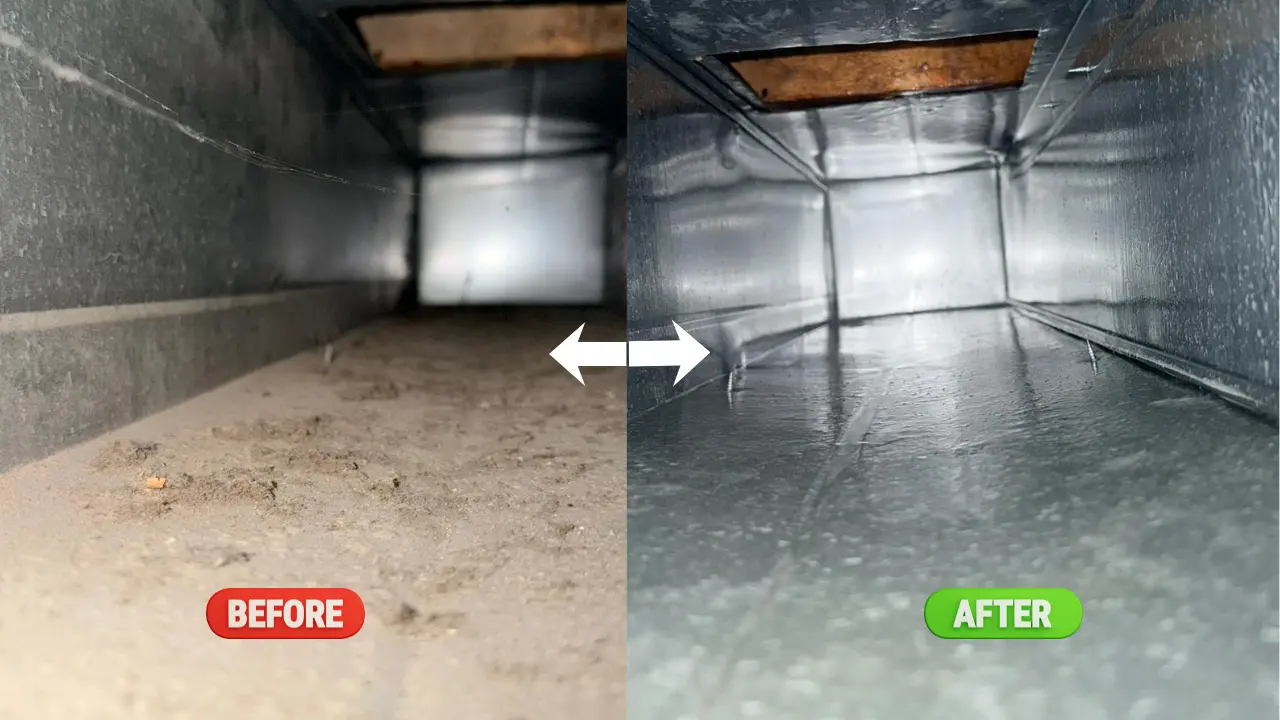

Ottawa Homeowners: That Musty Smell from Your Vents Is a Warning Sign.
Something Smells Wrong and It’s Not Coming from the Kitchen
You turn on your air conditioner for the first time in spring.
Within minutes, a musty, stale smell fills the room.
You check the filter. You clean the vents. But the smell keeps coming back every time the AC runs.
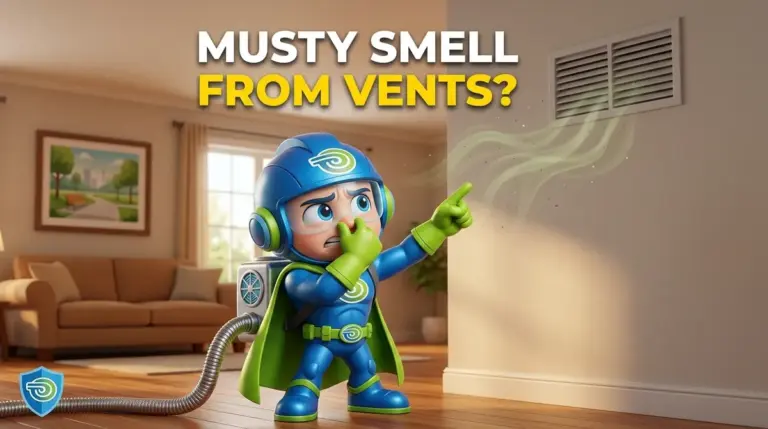
That’s not dust. That’s likely mold growing inside your air conditioner or ductwork and every time your system runs, it’s pushing mold spores through every room in your Ottawa home.
This guide will show you exactly how to spot it, what causes it, and what to do about it.
Why Ottawa Homes Are Especially Vulnerable to AC Mold
Ottawa’s climate creates the perfect conditions for mold growth inside HVAC systems.
Here’s why:
- Étés humides : Ottawa regularly hits 80–90% humidity in July and August. Your AC pulls warm, moist air through the system constantly.
- Long off-seasons : Your AC sits dormant all winter and spring. Moisture trapped inside has months to develop into mold before you turn the system on again.
- Temperature contrast : Cold evaporator coils meet warm humid air, creating condensation on metal surfaces inside the unit : exactly where mold thrives.
- Older homes : Many Ottawa homes in areas like Centretown, Glebe, and Vanier have aging ductwork that collects moisture and debris over decades.
If your AC hasn’t been professionally cleaned in the last 2 to 3 years, there’s a real chance mold has taken hold somewhere in the system.
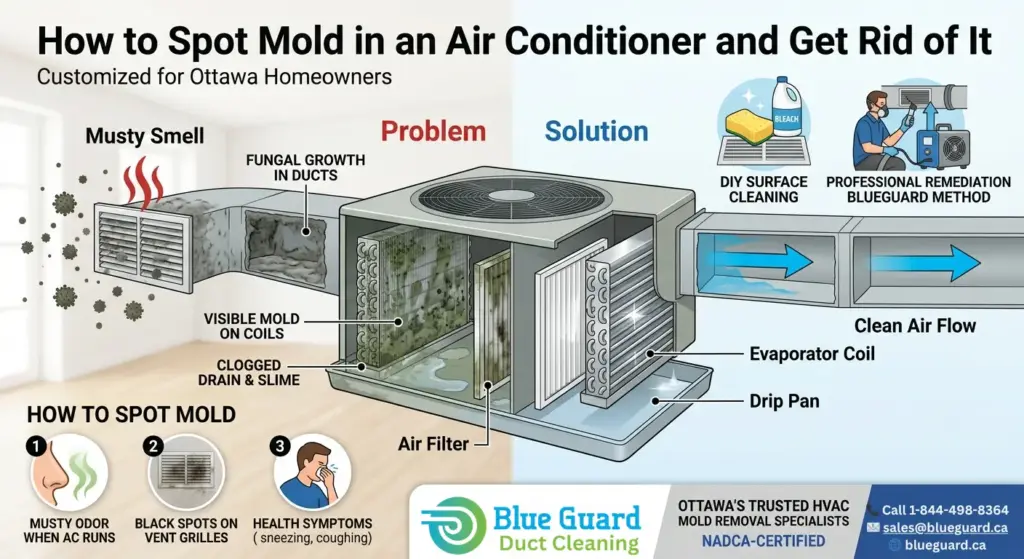
How to Spot Mold in Your Air Conditioner
Mold isn’t always visible especially when it’s growing deep inside your ductwork or on your evaporator coil. But there are clear signs to look for.
Visual Signs
Check these areas first:
- Vent registers and grilles : Look for black, green, or grey discoloration around the edges of your vents. Fuzzy or powdery spots are a strong indicator.
- Drip pan : Located beneath the evaporator coil. If you see standing water, slime, or dark spots, mold is likely present.
- serpentin d'évaporateur : If accessible, look for dark streaks or fuzzy growth on the coil fins. This is a common mold hotspot.
- Air filter : A filter with dark, blotchy staining beyond normal grey dust may indicate mold upstream in the system.
- Inside duct openings : Remove a vent cover and shine a flashlight inside. Look for dark spots, streaks, or fuzzy growth on duct walls.
Smell Signs
- Musty or earthy odor when the AC first turns on and sometimes while it runs
- Smell that gets worse in certain rooms mold may be concentrated near those vents
- Odor that disappears when the AC is off a strong indicator that the smell is coming from inside the system
Health Signs
Sometimes you notice the health effects before you see or smell anything:
- Increased sneezing, coughing, or congestion indoors
- Itchy or watery eyes that improve when you leave the house
- Worsening asthma or allergy symptoms
- Headaches or fatigue that seem tied to being home with the AC running
- Family members getting sick more often during summer months
If multiple people in your home are experiencing these symptoms and they improve outside, your AC system should be inspected immediately.
What Causes Mold to Grow in an Air Conditioner?
Understanding the cause helps you prevent it from coming back.
1. Excess Moisture and Condensation
Your AC cools air by passing it over cold evaporator coils. This process naturally produces condensation. If the drip pan doesn’t drain properly or the system isn’t sized correctly for your home, moisture builds up and mold follows.
2. Dirty Evaporator Coils
Dust and debris coat the evaporator coil over time. This layer traps moisture against the metal surface and provides organic material for mold to feed on.
3. Clogged Drain Line
The condensate drain line removes water from your AC system. When it clogs which happens commonly in Ottawa homes water backs up into the drip pan, overflows, and saturates duct insulation and nearby surfaces.
4. Poor Ventilation
Rooms with limited airflow basements, closed-off spaces, poorly ventilated bedrooms trap humidity and create conditions where mold spores settle and grow on duct surfaces.
5. Infrequent Filter Changes
A dirty, clogged filter restricts airflow. Restricted airflow causes the evaporator coil to get too cold, freeze, and then melt — repeatedly introducing moisture into the system.
6. Long Off-Season Dormancy
In Ottawa, your AC sits unused from September to May. Any residual moisture trapped inside during the last cooling season has all winter to develop into mold undetected before you turn the system on in June.
Can You Remove AC Mold Yourself?
For surface mold on accessible parts like vent covers, drip pans, or the outer casing you can clean it yourself carefully.
DIY cleaning for surface mold:
- Turn off the AC and disconnect power
- Remove vent grilles and wash with a diluted bleach solution (1 cup bleach per gallon of water)
- Wipe down accessible surfaces inside the unit with the same solution
- Clean or replace the air filter
- Clear the condensate drain line with a wet/dry vacuum or flush with diluted bleach
- Let everything dry completely before turning the system back on
Important limits of DIY cleaning:
- You cannot clean mold from inside ductwork without professional equipment
- You cannot safely clean mold from the evaporator coil without risking damage
- Surface cleaning does not address mold root structures (hyphae) embedded in duct insulation
- Disturbing mold without proper containment releases spores into your living space
If mold is inside your ducts, on your coil, or has spread beyond a small visible patch, call a professional.
When to Call a Professional HVAC Cleaning Company in Ottawa
Call BlueGuard immediately if:
- The musty smell persists after surface cleaning
- You see mold inside the ductwork, not just on vent covers
- Mold covers an area larger than roughly 10 square centimetres
- Family members have respiratory symptoms that improve outside the home
- Your drip pan has standing water or visible mold growth
- You haven’t had your system cleaned in 3 or more years
- You recently moved into a home and don’t know the HVAC cleaning history
Mold inside an HVAC system is not a DIY job. It requires professional equipment, containment procedures, and certified treatment to eliminate it properly and prevent it from returning.
How BlueGuard Removes Mold from Ottawa AC Systems
BlueGuard uses a multi-step process designed to fully eliminate mold from your air conditioner and ductwork not just mask it.
Step 1 : Full System Inspection
We inspect your evaporator coil, drip pan, drain line, blower, and accessible ductwork to identify all mold locations and assess severity before any cleaning begins.
Step 2 : Negative Air Pressure Setup
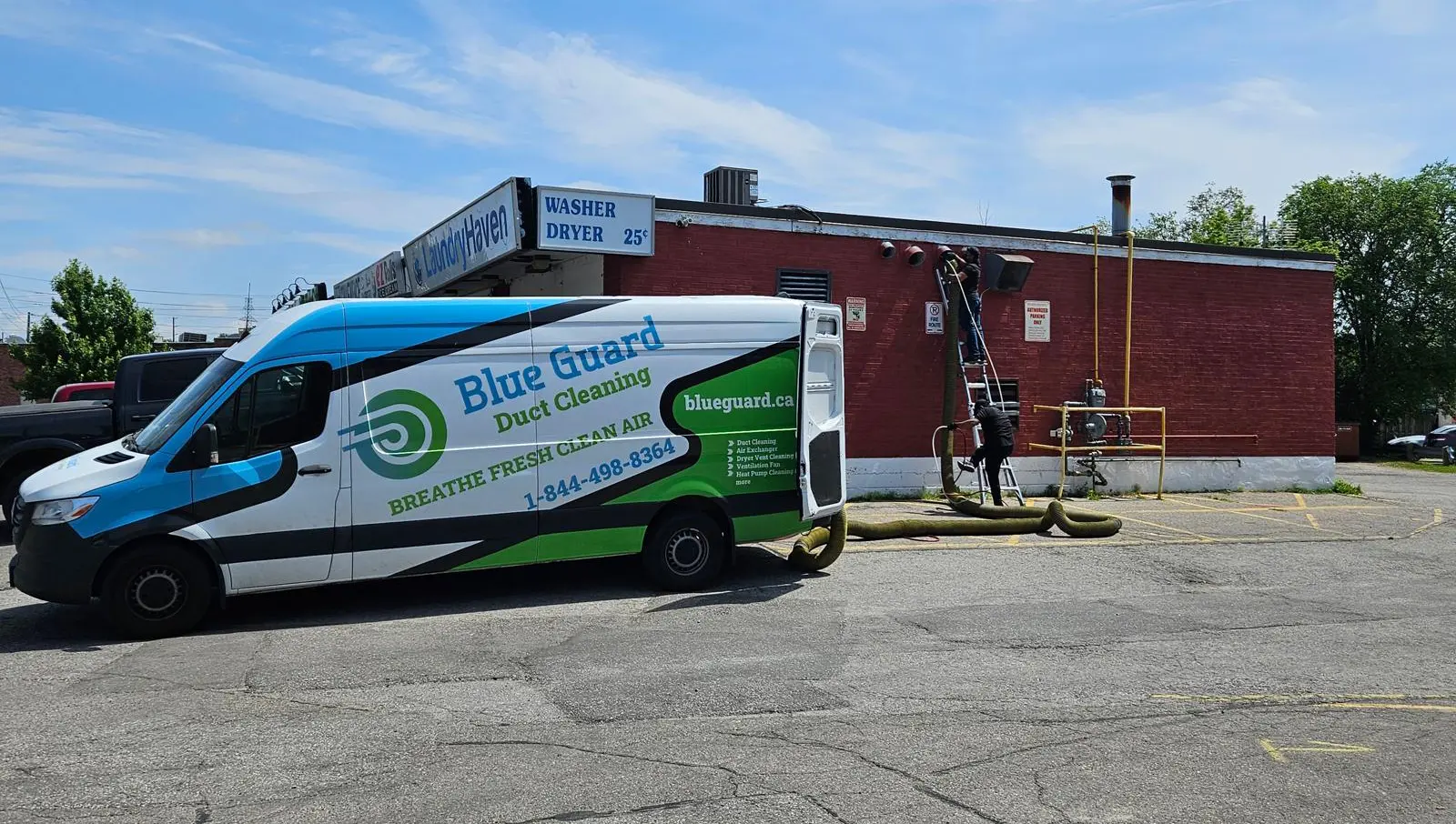
We connect commercial-grade vacuum equipment to your duct system, placing it under negative pressure so that mold spores dislodged during cleaning are captured not spread through your home.
Step 3 : Evaporator Coil and Drip Pan Cleaning
We clean the evaporator coil, clear the condensate drain line, and sanitize the drip pan removing the moisture source that feeds mold growth.
Step 4 : Full Duct Cleaning
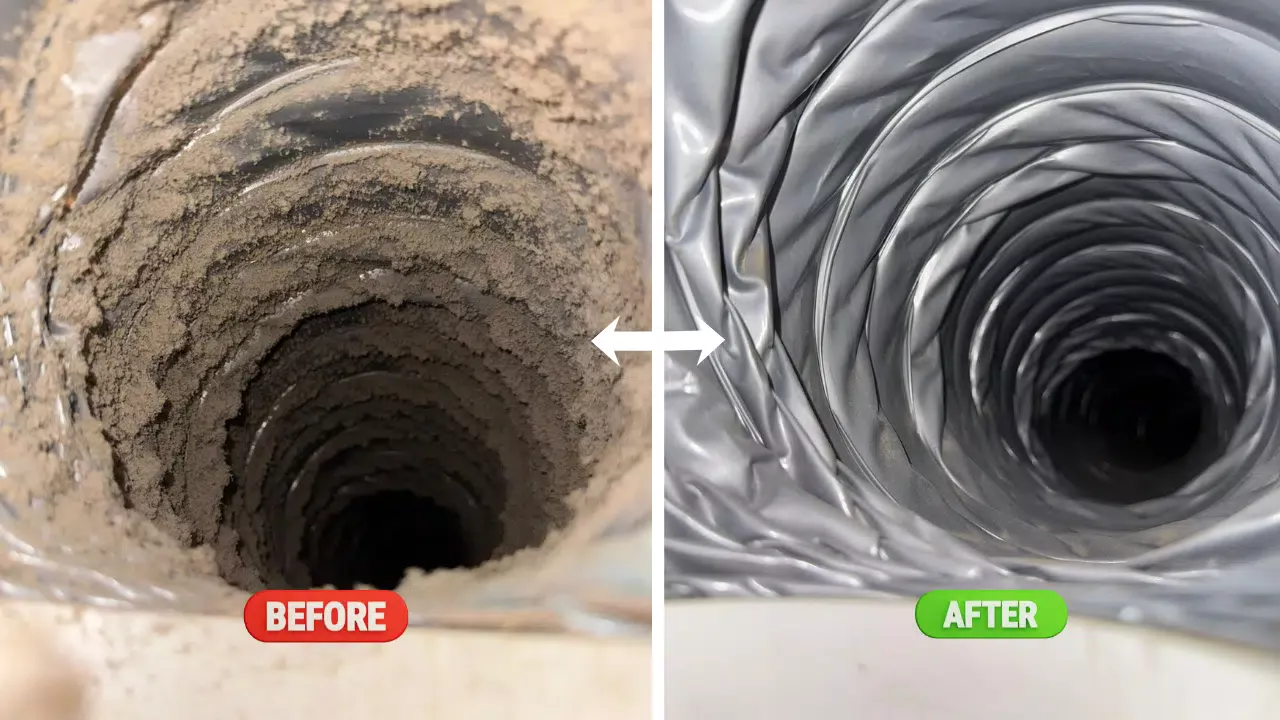
Every supply and return duct is cleaned using agitation tools and high-powered extraction removing mold, spores, debris, and buildup from duct walls throughout your home.
Step 5 : Antimicrobial Sanitization Treatment
We apply an EPA-approved antimicrobial treatment to duct surfaces to kill remaining mold spores and create a protective barrier that inhibits future mold growth.
Step 6 : Written Report
You receive full documentation of what was found, what was treated, and what was done useful for your records and for future reference.
How to Prevent Mold in Your Ottawa AC System
Once your system is clean, these steps will keep it that way:
- Change your filter every 1 to 3 months, don’t let it clog and restrict airflow
- Keep indoor humidity below 50% use a dehumidifier in summer if needed
- Schedule annual AC maintenance before the cooling season starts
- Check your drip pan seasonally, make sure it’s draining properly
- Run the fan periodically in off-season to prevent stagnant moisture buildup
- Book a professional HVAC cleaning every 2 to 3 years especially in Ottawa’s humid summers
Prevention is always cheaper than remediation.
BlueGuard Ottawa’s Trusted HVAC Mold Removal Specialists
BlueGuard est certifié NADCA and has helped hundreds of Ottawa homeowners eliminate mold from their HVAC systems — in Barrhaven, Kanata, Gloucester, Nepean, Centretown, Orleans, and everywhere in between.
Why Ottawa homeowners choose BlueGuard:
- ✅ Techniciens certifiés NADCA
- ✅ Commercial truck-mounted equipment
- ✅ Full mold inspection before any work begins
- ✅ Traitement antimicrobien disponible
- ✅ Tarification transparente, sans frais cachés
- ✅ Written report after every job
- ✅ Service bilingue anglais et français
- ✅ Fast scheduling across Ottawa and Gatineau
Book Your AC Mold Inspection Today
Don’t spend another summer breathing mold spores through your air conditioner.
BlueGuard will inspect your system, identify the problem, and fix it properly and completely.
📞 Call 1-844-498-8364 📧 sales@blueguard.ca 🌐 blueguard.ca
Free quote. No obligation. NADCA-certified service.
Foire aux questions
How do I know if there is mold in my air conditioner?
The most common signs are a musty smell when the AC runs, visible dark spots on vent covers or inside ducts, and allergy or respiratory symptoms that improve when you leave the house. A professional inspection will confirm whether mold is present inside the system.
Is mold in an air conditioner dangerous?
Yes. Mold spores circulated through your HVAC system can cause respiratory irritation, worsen asthma and allergies, and in some cases lead to more serious health issues especially for children, elderly residents, and anyone with a compromised immune system.
Can I clean mold from my AC myself?
You can clean surface mold from vent covers and drip pans with a diluted bleach solution. But mold inside your ductwork, on your evaporator coil, or in your air handler requires professional equipment to remove safely and completely.
How long does AC mold removal take in an Ottawa home?
A full HVAC cleaning and mold treatment for an average Ottawa home takes 2 to 4 hours. BlueGuard provides a time estimate based on your home’s size and system type before work begins.
Does BlueGuard offer mold sanitization treatment?
Yes. BlueGuard applies an EPA-approved antimicrobial treatment to duct surfaces after cleaning to kill remaining mold spores and help prevent regrowth. This is recommended for any home where mold has been confirmed in the HVAC system.
How often should Ottawa homeowners get their AC system inspected for mold?
At minimum, have your system inspected every 2 to 3 years or annually if you have allergies, pets, a humid home, or a history of mold issues. BlueGuard recommends a pre-season inspection each spring before you turn the AC on for the first time.
BlueGuard dessert-il tous les quartiers d'Ottawa ?
Yes. BlueGuard serves all Ottawa neighbourhoods including Barrhaven, Kanata, Nepean, Orleans, Gloucester, Centretown, Westboro, Glebe, Alta Vista, and surrounding Gatineau communities.