



Your Dryer Could Be the Most Dangerous Appliance in Your Home and Most People Have No Idea.
It Starts With a Load of Laundry
You toss in a load of towels. Press start. Walk away.
That’s it. That’s all it takes.
A clogged dryer vent can reach ignition temperature in a single cycle. Lint the fluffy, harmless-looking stuff that collects in your trap is one of the most flammable household materials there is. And when it builds up inside your dryer vent line, you’re not just running a dryer. You’re running a fire waiting to happen.
This isn’t meant to scare you. It’s meant to make sure you never become a statistic.
In Canada, dryer fires cause millions of dollars in property damage every single year. Many of those fires happen in homes just like yours in Ottawa neighbourhoods like Barrhaven, Kanata, Orleans, and Nepean where busy families run their dryers every day and never think twice about the vent line behind the wall.
This guide will change that.
The Numbers Ottawa Homeowners Need to Know
- Dryers are responsible for thousands of house fires in Canada every year
- The leading cause is failure to clean the dryer vent not mechanical failure
- Lint ignites at approximately 200°C well within normal dryer operating temperatures
- A fully clogged dryer vent can cause a fire in a single drying cycle
- Most dryer vent fires start inside the wall invisible until it’s too late
- The average Ottawa home has never had its dryer vent professionally cleaned
The scary part? Most of these fires are completely preventable.
How a Dryer Vent Fire Actually Happens
Understanding the mechanics helps you take it seriously.
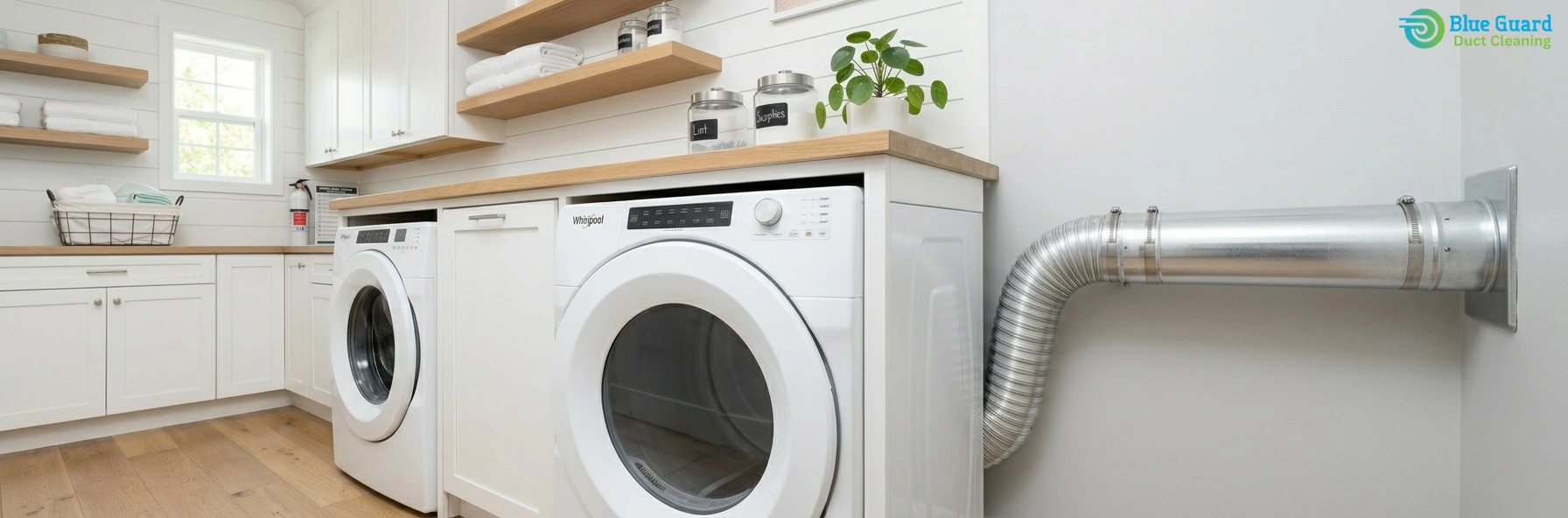
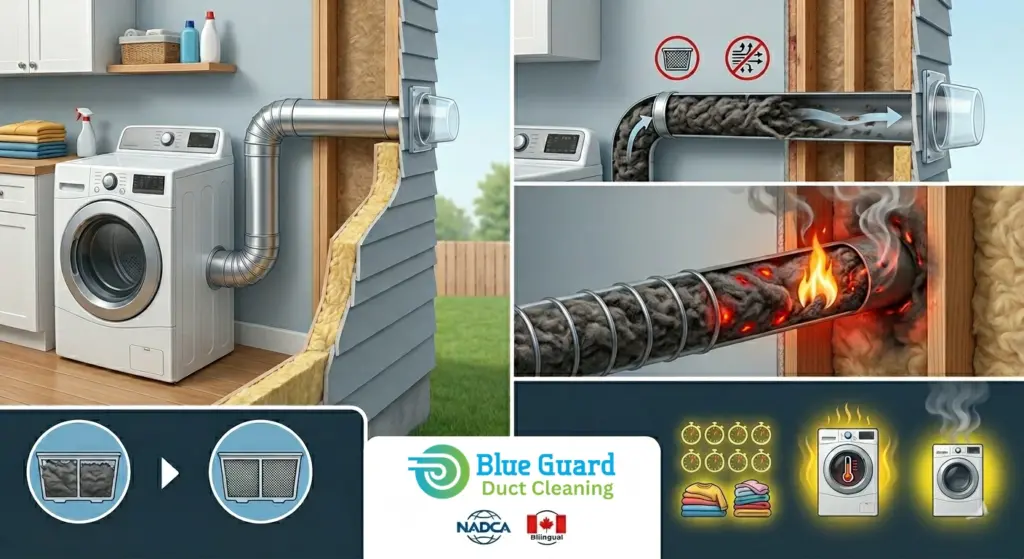
Your dryer works by heating air and tumbling your clothes through it. That hot, moist air along with loosened lint gets pushed out through the dryer vent line, through your wall or ceiling, and out an exterior termination cap.
Here’s where it goes wrong.
Stage 1 : Lint Starts Accumulating
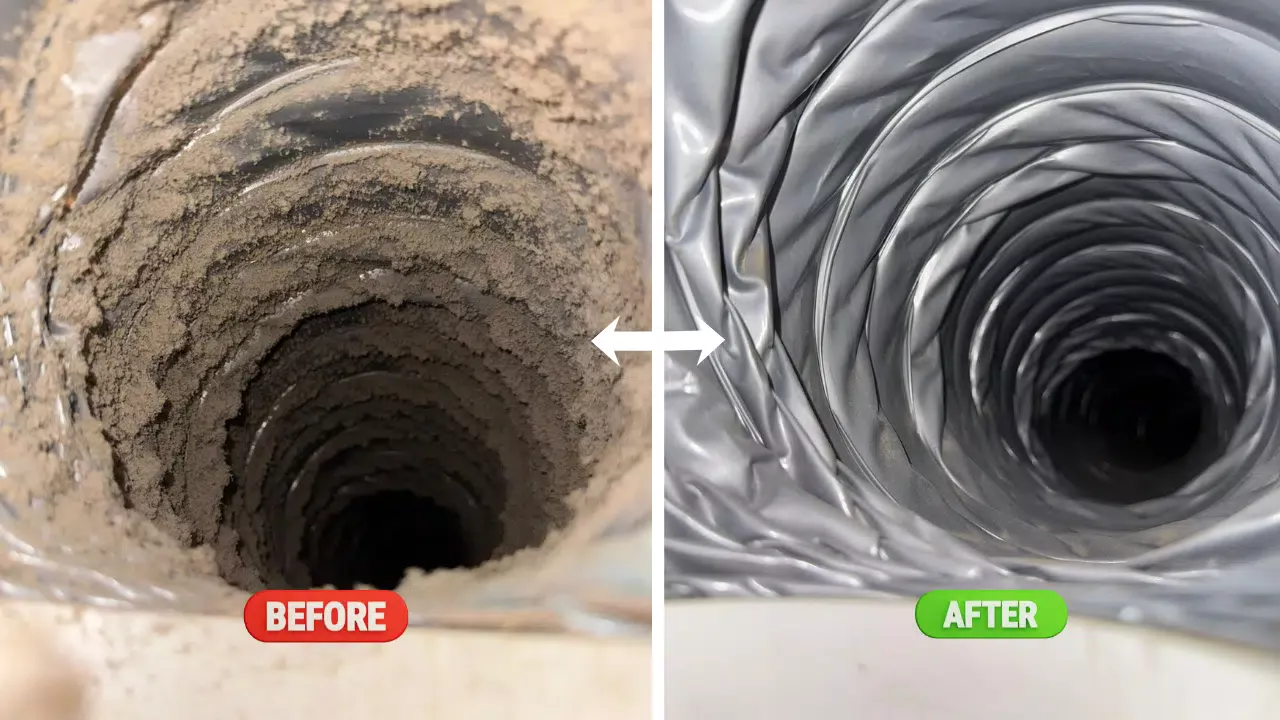
Every load of laundry sheds lint. Your lint trap catches some of it — but not all. The rest gets pushed into the vent line. Over months and years, it sticks to the duct walls, builds up in bends and elbows, and gradually restricts airflow.
Stage 2 : Airflow Gets Restricted
As lint builds up, less hot air can escape. Your dryer works harder to push air through a narrowing passage. It runs longer. It gets hotter. The lint-coated vent line is being exposed to increasingly high temperatures every single cycle.
Stage 3 : Temperature Builds to Ignition Point
The combination of restricted airflow, excessive heat, and a vent line packed with highly flammable lint creates the perfect fire condition. One cycle. One spark. One moment of peak temperature — and the lint ignites inside the wall.
Stage 4 : Fire Spreads Through the Wall
Vent fires spread fast because they start inside the wall where there’s no smoke detector, no sprinkler, and no way for you to see or smell it until it has already spread into your framing, insulation, and ceiling.
By the time the alarm sounds, the damage is already extensive.
Ottawa-Specific Risk Factors
Not all homes face the same dryer vent risk. Ottawa homes have several factors that increase the danger:
Long, Complex Vent Runs
Many Ottawa homes especially newer builds in Barrhaven, Kanata, and Stittsville have dryers located in second-floor laundry rooms or interior spaces. This means the vent line has to travel a long distance through walls and ceilings before reaching the exterior. Every metre of vent and every bend is a place where lint accumulates.
Cold Climate Condensation
Ottawa winters are extreme. When hot, moist dryer exhaust travels through a vent line running through cold exterior walls, condensation forms inside the duct. Wet lint sticks harder and accumulates faster than dry lint.
Older Homes with Plastic or Foil Flex Duct
Many older Ottawa homes in Centretown, Glebe, Vanier, and Hull-adjacent areas still have dryers connected with plastic accordion-style flexible duct the kind that looks like a silver accordion hose. This type of duct is no longer up to code because:
- The ridges trap lint at every peak
- It collapses easily, creating airflow blockages
- It is highly flammable, it doesn’t just carry a fire, it becomes part of the fire
If your dryer connects to a plastic or foil flex duct, replace it with rigid or semi-rigid metal duct immediately.
High-Use Households
Large families, households with young children, or homes that run the dryer daily accumulate lint at a much faster rate. The standard “clean once a year” advice doesn’t apply to high-use households where every 6 months is more appropriate.
Warning Signs Your Dryer Vent Is Dangerously Clogged
Watch for these signals every time you do laundry:
The Dryer Takes More Than One Cycle
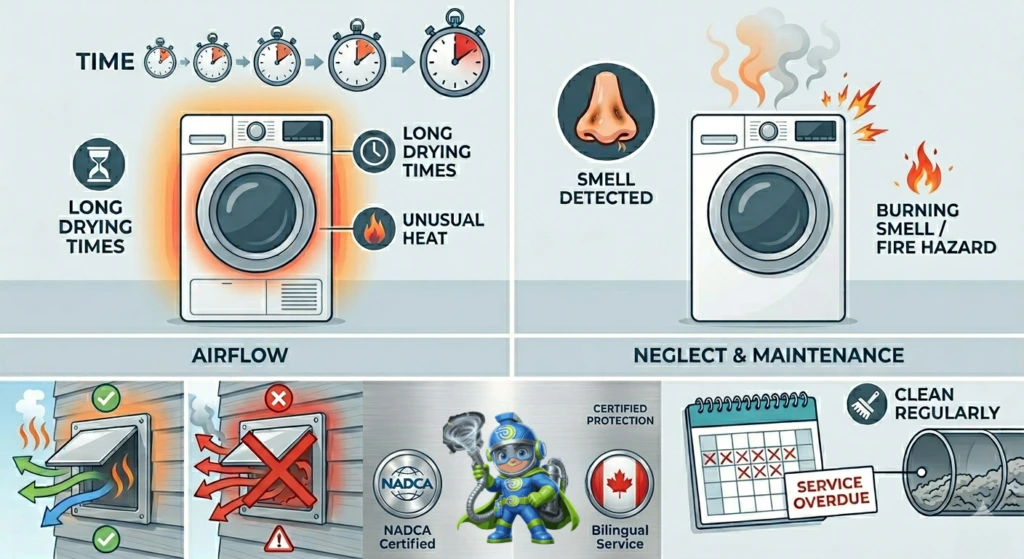
This is the most common and most ignored warning sign. If your clothes come out damp after a full cycle or you automatically run everything twice your vent is likely significantly restricted. The dryer cannot expel moist air efficiently, so clothes stay wet.
The Dryer or Laundry Room Feels Unusually Hot
Your dryer should produce heat but the appliance’s exterior and the room around it should stay at a reasonable temperature. If the dryer casing is hot to the touch, or your laundry room feels like a sauna during a cycle, heat is backing up instead of exhausting properly.
You Can Smell Burning During a Cycle
Any burning smell even faint during a drying cycle is a serious warning. Lint heating to near-ignition temperature produces a distinct burnt smell. Stop the dryer immediately and do not run it again until the vent has been inspected and cleaned.
Lint Around the Exterior Vent Cap
Go outside and look at your dryer exhaust termination the flap on your exterior wall, soffit, or roof. If you see lint buildup around the cap, or the flap doesn’t open properly when the dryer runs, airflow is restricted at the termination point.
The Exterior Flap Doesn’t Open When the Dryer Runs
Your termination cap has a flap that should open when air is flowing and close when the dryer is off. If it stays closed while the dryer runs airflow is completely blocked somewhere in the line.
It’s Been More Than a Year Since Cleaning
If you can’t remember the last time your dryer vent was cleaned or if you’ve never had it professionally cleaned it needs attention now, regardless of whether you’re seeing symptoms.
Your Dryer Vent Fire Prevention Checklist
Use this as your ongoing maintenance guide:
Every Load
- Clean the lint trap before every single drying cycle not after, before
- Never run the dryer when you leave the house or go to sleep
- Don’t dry items that have been in contact with flammable substances (gasoline, cooking oils, paint thinner)
Every Month
- Check behind the dryer make sure the flexible connector section isn’t kinked, crushed, or disconnected
- Wipe down the lint trap housing with a damp cloth residue builds up even when the screen looks clean
- Check that the exterior vent cap opens freely when the dryer runs
Every 3 Months
- Wash the lint screen with warm soapy water dryer sheet residue coats the mesh and reduces airflow even when the screen looks clean
- Check the vent line for any signs of damage, disconnection, or crushing behind the dryer
Every 6 to 12 Months
- Have the full dryer vent line professionally cleaned every 6 months for high-use households, every 12 months for average use
- Inspect the exterior termination cap for lint buildup, bird nests, or ice blockages (Ottawa winters regularly cause ice to form at exterior vent caps)
Immediately
- Replace any plastic accordion flex duct with rigid or semi-rigid metal duct
- Call BlueGuard if you notice burning smell, excessive heat, or clothes not drying properly
DIY Dryer Vent Cleaning. What You Can and Can’t Do
What You Can Do Yourself
For short, straight vent runs with easy access, basic DIY maintenance is possible:
- Clean the lint trap housing : use a long flexible brush to reach down into the housing behind the screen
- Disconnect and clean the first section : if your dryer has a short, accessible connector to the wall, you can disconnect it and vacuum it out
- Clean the exterior termination : remove the cap and clean out lint from the last section of vent and the cap itself
What You Cannot Do Safely Yourself
- Long vent runs through walls and ceilings you cannot reach or clean these with household tools
- Vent lines with multiple bends and elbows lint accumulates heaviest in bends and household brushes can’t navigate them effectively
- Vent lines you can’t see if your vent runs through a finished wall, you have no idea what’s in there
- Bird nests or external blockages common in Ottawa spring months, these require inspection from outside and inside
- Any situation involving burning smell or suspected ignition call a professional immediately
The truth is that most Ottawa homes have dryer vents that run through walls, around corners, and up through ceilings routes that are completely inaccessible without professional equipment.
What a Professional Dryer Vent Cleaning Includes
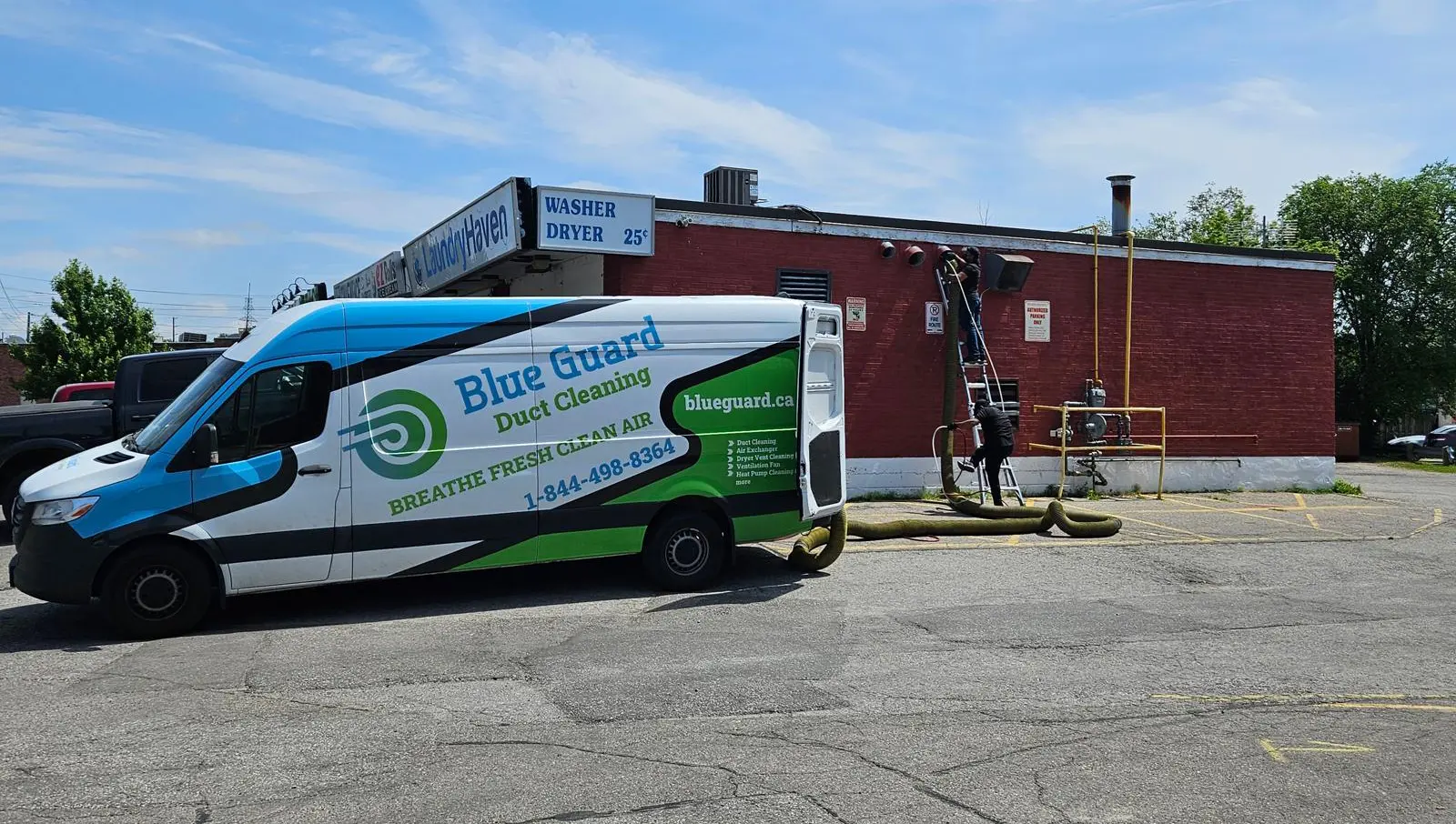
When BlueGuard cleans your dryer vent, here’s exactly what happens:
Full Line Inspection
We assess the entire vent route from the dryer connection to the exterior termination and identify blockages, damage, improper materials, and fire hazards before cleaning begins.
Rotary Brush Cleaning
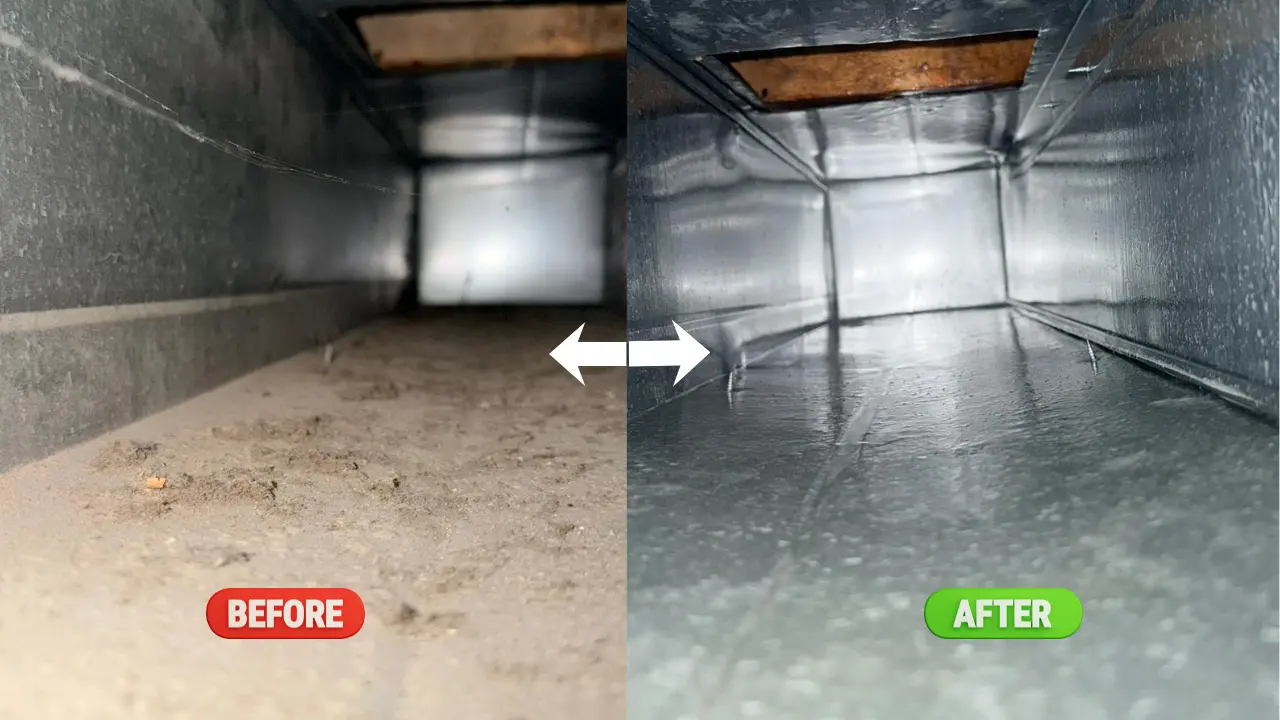
We use professional rotary brush systems that navigate bends and reach the full length of your vent line dislodging compacted lint, debris, and blockages that household tools can’t reach.
High-Powered Vacuum Extraction
All dislodged material is extracted by commercial vacuum equipment captured, not pushed back into your home or deeper into the vent line.
Exterior Termination Cleaning
We clean and inspect the exterior vent cap removing lint buildup, bird nests, ice blockages, and any obstruction that prevents proper airflow.
Airflow Verification
After cleaning, we verify that airflow through the vent line meets safe operating standards so you know the job is done properly, not just partially.
Written Report
You receive documentation of the vent condition, what was found, what was cleaned, and any recommendations including whether your current vent materials need upgrading.
What Happens If You Ignore It
Let’s be direct.
A clogged dryer vent doesn’t give you many warnings before it becomes a fire. And when a dryer vent fire starts inside a wall, it’s already bypassed every safety system in your home.
By the time you smell smoke:
- The fire has been burning inside your wall for minutes
- It has likely spread to framing and insulation
- Your drywall is already damaged from heat
- Structural components may be involved
The average cost of a dryer vent fire? Tens of thousands of dollars in structural repairs or a total loss.
The cost of a professional dryer vent cleaning from BlueGuard? A fraction of that. Done in under an hour.
This is the easiest fire prevention investment an Ottawa homeowner can make.
BlueGuard Ottawa’s Dryer Vent Cleaning Experts
BlueGuard is NADCA-certified and has cleaned dryer vents in hundreds of Ottawa homes from Barrhaven townhouses and Kanata newer builds to century homes in Westboro and Centretown.
We know Ottawa’s housing stock. We know the long vent runs in newer developments. We know the plastic flex duct issues in older homes. And we have the equipment to clean every configuration safely and completely.
Why Ottawa homeowners trust BlueGuard for dryer vent cleaning:
- ✅ NADCA-certified technicians
- ✅ Professional rotary brush and vacuum systems
- ✅ Full vent line cleaning not just the accessible section
- ✅ Exterior termination inspection and cleaning
- ✅ Airflow verification after every job
- ✅ Written service report
- ✅ Bilingual service English and French
- ✅ Fast scheduling across Ottawa, Gatineau, and surrounding areas
Book Your Dryer Vent Cleaning Today
Don’t wait for a burning smell. Don’t wait for a fire.
One call to BlueGuard and your dryer vent is cleaned, inspected, and verified safe — in under an hour, for less than you’d spend on a single service call after something goes wrong.
📞 Call 1-844-498-8364 📧 sales@blueguard.ca 🌐 blueguard.ca
Free quote. Fast scheduling. NADCA-certified dryer vent cleaning across Ottawa.
Frequently Asked Questions
How often should I have my dryer vent cleaned in Ottawa?
For most Ottawa households, once a year is the minimum. High-use households families running the dryer daily should clean every 6 months. Homes with long vent runs, multiple bends, or older flex duct should also clean more frequently. BlueGuard can assess your specific setup and recommend the right schedule.
Can a clogged dryer vent really cause a fire?
Yes, and it’s one of the leading causes of house fires in Canada. Lint is highly flammable, and a clogged vent traps heat until it reaches ignition temperature. The fire starts inside the wall, where it’s invisible and bypasses smoke detectors until it has already spread.
What are the first signs my dryer vent is clogged?
The most common early signs are clothes taking more than one cycle to dry, the dryer or laundry room feeling unusually hot, and a burning smell during operation. If you notice any of these stop using the dryer and call BlueGuard for an inspection.
Is plastic flex duct safe for dryer vents in Ottawa?
No. Plastic accordion-style flex duct is a fire hazard and is no longer up to code for dryer vent connections. It traps lint in its ridges, collapses easily, and is highly flammable. If your dryer uses plastic flex duct, replace it with rigid or semi-rigid metal duct immediately.
How long does a professional dryer vent cleaning take?
For most Ottawa homes, a professional dryer vent cleaning takes 45 minutes to 1 hour. Homes with longer or more complex vent runs may take slightly longer. BlueGuard provides a time estimate before work begins.
Can I clean my dryer vent myself?
You can clean the lint trap housing and the short accessible section near the dryer. But most Ottawa homes have dryer vents that run through walls and ceilings areas completely inaccessible without professional rotary brush equipment. DIY cleaning gives a false sense of security for long vent runs.
Does BlueGuard clean dryer vents in apartment buildings?
Yes. BlueGuard provides dryer vent cleaning for single-family homes, condos, townhouses, and full apartment buildings across Ottawa and the surrounding region. For multi-unit buildings, we offer unit-by-unit cleaning packages for property managers.
Does BlueGuard serve all Ottawa neighbourhoods?
Yes. BlueGuard serves all Ottawa neighbourhoods including Barrhaven, Kanata, Nepean, Orleans, Gloucester, Centretown, Westboro, Glebe, Alta Vista, Stittsville, and surrounding communities including Gatineau.