Gatineau Homeowners: One Simple Task That Makes a Big Difference in Your Air Quality.
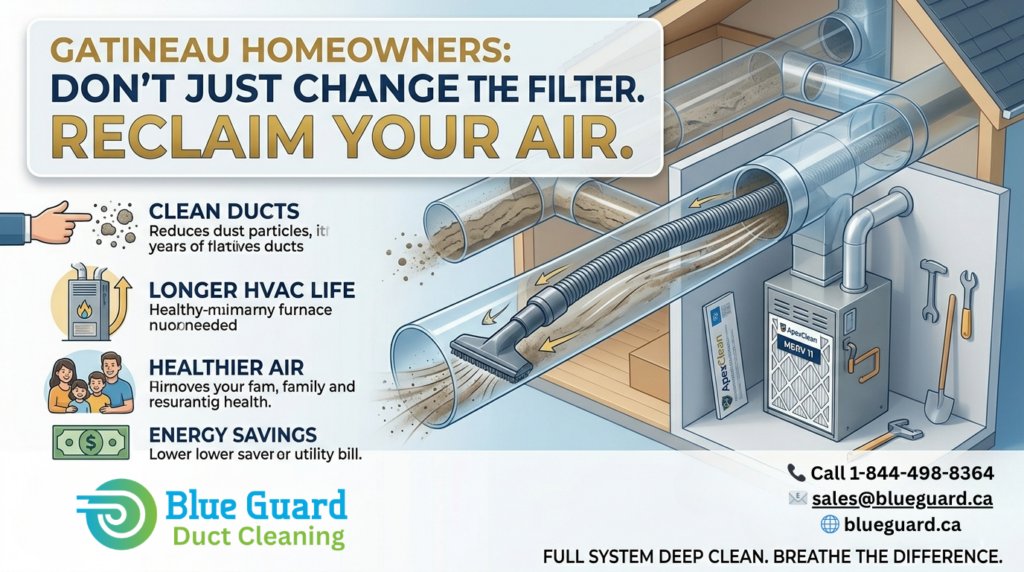
The Filter Nobody Thinks About Until It’s Too Late
Your HVAC system has one job keep your home comfortable all year round.
But there’s a small part of that system doing a massive amount of work every single day. Your air filter.
It traps dust, pollen, pet dander, mold spores, and airborne particles before they circulate through your home. It protects your lungs. It protects your HVAC equipment. It keeps your energy bills in check.
And most Gatineau homeowners never touch it until something goes wrong.
A clogged, dirty air filter doesn’t just reduce air quality it forces your furnace and AC to work harder, drives up your energy bills, shortens your equipment’s lifespan, and pushes all those trapped contaminants back into the air you breathe.
This guide will show you exactly how to clean or replace your HVAC air filter and when it’s time to call in a professional.
Why Air Filter Maintenance Matters More in Gatineau
Gatineau’s climate puts your HVAC system and its filter under serious stress.
- Harsh winters : Your furnace runs almost non-stop from November through April, pulling air and debris through the filter constantly
- Humid summers : High summer humidity means more moisture in the air, which leads to faster mold and bacteria buildup on filter surfaces
- Seasonal pollen : Gatineau’s spring and fall bring heavy pollen counts from the Outaouais River valley and surrounding green spaces
- Urban particulates : Traffic, construction, and urban density mean more airborne particles entering your home daily
- Older housing stock : Many Gatineau homes in Hull, Aylmer, and Buckingham have older HVAC systems that rely even more heavily on a clean filter to function properly
In a climate like Gatineau’s, a neglected air filter isn’t just an inconvenience. It’s a health risk.
What Does an Air Filter Actually Do?
Your HVAC air filter sits at the point where air enters your furnace or air handler. Every cubic metre of air in your home passes through it multiple times per day.
The filter captures:
- Dust and household debris
- Pet dander and hair
- Pollen and outdoor allergens
- Mold spores
- Bacteria and some viruses
- Smoke particles
- Fine construction dust
A clean filter captures these efficiently. A clogged filter lets them pass through and some get pushed directly into your living spaces through the supply vents.
Signs Your HVAC Filter Needs Attention Right Now
You don’t need to wait for your scheduled change. These signs mean your filter needs cleaning or replacement today:
- Visible grey or black buildup on the filter surface when you pull it out
- Dust blowing from your vents when the HVAC runs
- Your home feels dusty even right after cleaning
- Musty or stale smell when the furnace or AC turns on
- Allergy symptoms getting worse indoors sneezing, itchy eyes, congestion
- Rooms that won’t reach the right temperature despite the system running
- Your energy bill is higher than normal with no clear reason
- The HVAC system sounds louder or runs longer than usual
Any one of these is a signal. More than one means don’t wait.
Types of HVAC Air Filters Know What You Have
Before you clean or replace your filter, you need to know what type you’re dealing with.
Disposable Fibreglass Filters (1-inch)
The most basic and most common filter in Gatineau homes. These are designed for single use only never clean these, replace them. They cost $5 to $15 and should be swapped every 30 to 60 days.
Disposable Pleated Filters (1-inch to 4-inch)
More effective than fibreglass. These have a higher MERV rating (see below) and catch finer particles. Also single-use only replace, don’t clean. Depending on thickness, these last 1 to 3 months.
Washable/Reusable Filters
These are designed to be cleaned and reused. Usually made of electrostatic or foam material. They cost more upfront but save money over time. These are the only type you should wash.
HEPA Filters
High-Efficiency Particulate Air filters. Extremely effective captures particles as small as 0.3 microns. Most are disposable. Some high-end systems use washable HEPA filters. Check your manufacturer’s guide before cleaning.
Electronic Air Cleaners
Some Gatineau homes have whole-home electronic air cleaners built into the HVAC system. These have collector plates that can be washed. Refer to your system manual for specific instructions.
Rule of thumb: If you’re unsure whether your filter is washable, check the frame. Washable filters are typically labelled “permanent” or “reusable.” When in doubt, replace it.
Understanding MERV Ratings
MERV stands for Minimum Efficiency Reporting Value. It measures how effectively a filter captures particles.
| MERV Rating | What It Captures | Best For |
|---|---|---|
| 1–4 | Large dust and debris | Basic protection, older systems |
| 5–8 | Dust mites, mold spores, pollen | Most Gatineau homes |
| 9–12 | Fine dust, pet dander, bacteria | Allergy sufferers, pet owners |
| 13–16 | Viruses, smoke, fine particles | High sensitivity households |
| 17+ (HEPA) | Nearly all airborne particles | Medical-grade environments |
For most Gatineau homes, a MERV 8 to 11 filter is the sweet spot effective filtration without restricting airflow too much.
Important: Don’t assume higher is always better. A MERV 13+ filter in an older HVAC system can restrict airflow so much it damages your equipment. Check your system’s compatibility before upgrading.
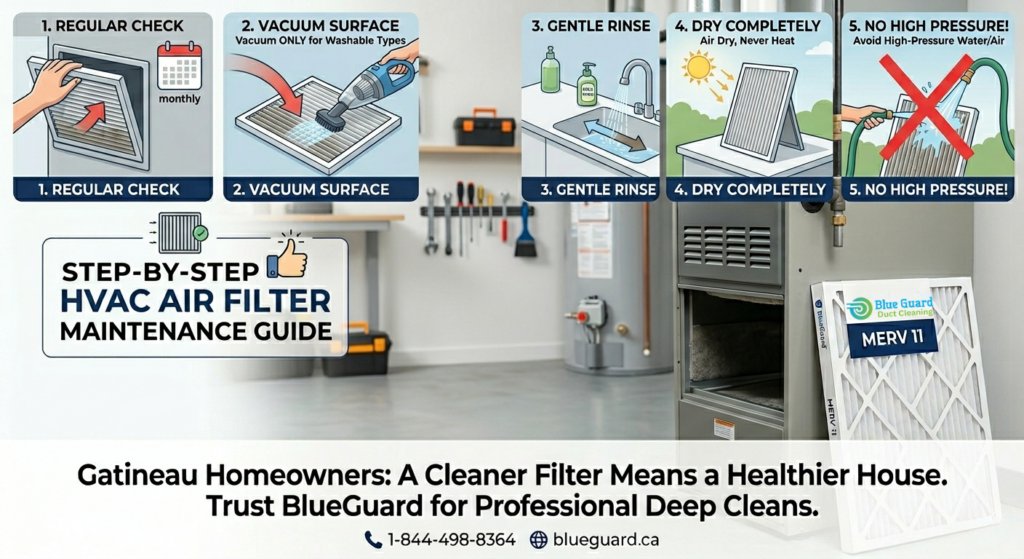
How to Clean a Washable HVAC Air Filter Step by Step
If you have a washable/reusable filter, here’s how to clean it properly.
What You’ll Need
- Garden hose or sink with running water
- Soft brush (optional)
- Mild dish soap or white vinegar
- Clean dry towel
- Somewhere to let the filter air dry completely
Step 1 : Turn Off Your HVAC System
Before you do anything, turn off your furnace or air handler at the thermostat. You don’t want the system pulling unfiltered air through while the filter is out.
Step 2 : Locate and Remove the Filter
Your filter is typically located in one of these spots:
- Inside the furnace or air handler unit itself
- In a return air vent on the wall or ceiling
- In a dedicated filter slot near the furnace
Slide the filter out carefully. Note the direction of the airflow arrow on the frame you’ll need to reinstall it the same way.
Step 3 : Inspect the Filter
Hold it up to a light source. A filter that’s uniformly grey or light tan is dirty but cleanable. A filter that’s black, visibly wet, or showing mold growth should be discarded and replaced do not attempt to clean a moldy filter.
Step 4 : Remove Loose Debris
Take the filter outside and gently tap it against a hard surface to knock off loose dust. You can also use a vacuum with a brush attachment to remove surface debris work from the clean side through to the dirty side.
Step 5 : Rinse with Water
Use a garden hose or sink faucet to rinse the filter. Always rinse from the clean side through to the dirty side this pushes debris out in the direction it came in, not deeper into the filter material. Use low to medium water pressure. High pressure can damage the filter fibres.
Step 6 : Wash with Mild Soap (If Needed)
For heavily soiled filters, mix a small amount of mild dish soap with warm water and gently work it through the filter with your hands or a soft brush. Rinse thoroughly until the water runs completely clear.
Step 7 : Rinse with White Vinegar (Optional)
A final rinse with diluted white vinegar (1 part vinegar to 3 parts water) helps neutralize odors and kills any residual bacteria or mold spores on the filter surface.
Step 8 : Dry Completely Before Reinstalling
This step is critical. Never reinstall a damp filter. A wet filter restricts airflow, promotes mold growth, and can damage your HVAC equipment.
Shake off excess water and let the filter air dry in a well-ventilated area ideally outdoors in the sun. This typically takes 2 to 4 hours in Gatineau summer conditions. In winter, allow more time indoors near a heat source.
Do not use a hair dryer or place it near an open flame to speed up drying.
Step 9 : Reinstall Correctly
Once fully dry, slide the filter back in with the airflow arrow pointing toward the furnace or air handler not away from it. Make sure it fits snugly with no gaps around the edges.
Step 10 : Turn the System Back On
Power your HVAC back on at the thermostat and listen for normal operation. Your system should run quieter and feel more responsive with a clean filter in place.
How Often Should You Clean or Replace Your HVAC Filter in Gatineau?
There is no single answer it depends on your household. Use this as your guide:
| Household Situation | Replacement / Cleaning Frequency |
|---|---|
| Single occupant, no pets | Every 6–12 months |
| Average family, no pets | Every 90 days |
| One pet in the home | Every 60 days |
| Multiple pets | Every 30–45 days |
| Allergy or asthma sufferers | Every 30–45 days |
| Recent home renovation | After every major project |
| Heavy smoker in the home | Every 30 days |
| Gatineau spring/fall pollen season | Check monthly, replace as needed |
Quick check method: Pull your filter out and hold it up to a light. If you can’t see light through it replace or clean it today.
Filter Cleaning vs. Full HVAC Cleaning. What’s the Difference?
A clean filter is essential. But it only catches particles before they enter the system.
It does nothing about the dust, debris, and mold that’s already built up inside your ductwork, on your evaporator coil, or inside your blower motor over years of use.
Think of it this way: changing your filter is like brushing your teeth. A professional HVAC cleaning is like a dental cleaning it reaches the places your toothbrush never could.
Your filter should be cleaned or replaced regularly. Your full HVAC system should be professionally cleaned every 3 to 5 years or sooner if you have pets, allergies, or a history of mold issues.
BlueGuard handles the deep clean. You handle the filter in between.
Common Filter Cleaning Mistakes to Avoid
- Cleaning a disposable filter : disposable filters are not designed to be washed and will fall apart or lose effectiveness
- Reinstalling a damp filter promotes mold growth inside your system
- Installing backwards, the filter must face the correct airflow direction or it won’t work properly
- Leaving gaps around the edges unfiltered air bypasses the filter entirely
- Waiting until the filter is completely black by then, your HVAC has already been straining for weeks
- Using high-pressure water damages the filter media and reduces effectiveness
- Skipping the full system cleaning clean filters don’t compensate for dirty ducts
When a Filter Change Isn’t Enough
Sometimes a clean filter doesn’t solve the problem.
If you’re still noticing dust, odors, or poor air quality after putting in a fresh filter the issue is deeper in your system.
Call BlueGuard if:
- The musty smell persists even with a new filter installed
- Dust continues blowing from vents after a filter change
- Someone in your home has ongoing respiratory symptoms indoors
- You haven’t had a professional HVAC cleaning in 3 or more years
- You can see visible buildup inside your duct openings
- Your energy bills remain high despite a clean filter
These are signs that your ducts, coil, or blower need professional attention.
BlueGuard Gatineau’s Trusted HVAC Cleaning Experts
BlueGuard is NADCA-certified and has helped hundreds of Gatineau homeowners breathe cleaner air in Hull, Aylmer, Gatineau sector, Buckingham, Masson-Angers, and everywhere in between.
We don’t just clean the parts you can see. We clean the entire system ducts, coils, blower, and all mechanical components using commercial truck-mounted equipment that removes years of buildup in a single visit.
Why Gatineau homeowners choose BlueGuard:
- ✅ NADCA-certified technicians
- ✅ Truck-mounted commercial equipment
- ✅ Full system cleaning not just the vents
- ✅ Bilingual service English and French
- ✅ Transparent pricing, no surprise charges
- ✅ Written service report after every job
- ✅ Fast scheduling across Gatineau and Ottawa
Book Your HVAC Cleaning in Gatineau Today
You handle the filter. Let BlueGuard handle everything else.
If your system hasn’t been professionally cleaned in the last few years, now is the time. A single cleaning makes a noticeable difference in air quality, energy efficiency, and system performance guaranteed.
📞 Call 1-844-498-8364 📧 sales@blueguard.ca 🌐 blueguard.ca
Free quote. No obligation. Bilingual NADCA-certified service in Gatineau.
Frequently Asked Questions
Can I clean a disposable HVAC filter?
No. Disposable filters whether fibreglass or pleated are designed for single use only. Washing them damages the filter media and makes them ineffective. Only washable or reusable filters labelled “permanent” should be cleaned. All others must be replaced.
How do I know if my filter is washable?
Check the frame of the filter. Washable filters are typically labelled “permanent,” “reusable,” or “washable.” They are usually made of electrostatic or foam material and feel sturdier than disposable filters. When in doubt, replace rather than wash.
What MERV rating filter should I use in my Gatineau home?
For most Gatineau homes, a MERV 8 to 11 filter provides the best balance of filtration and airflow. If someone in your home has allergies or asthma, a MERV 11 is a good choice. Always check your HVAC system’s manual for the maximum MERV rating it can handle before upgrading.
How long does a washed filter take to dry?
In Gatineau summer conditions, a washable filter typically air-dries in 2 to 4 hours outdoors. In winter or indoors, allow longer up to 6 to 8 hours. Never reinstall a damp filter, as this promotes mold growth and restricts airflow.
Will a clean filter fix my dusty home?
A clean filter helps, but if dust persists after a filter change, the problem is likely inside your ductwork. Dust buildup on duct walls gets recirculated every time your system runs. A professional duct cleaning by BlueGuard removes that buildup at the source.
Does BlueGuard serve all areas of Gatineau?
Yes. BlueGuard serves all Gatineau sectors including Hull, Aylmer, Gatineau, Buckingham, Masson-Angers, and Pointe-Gatineau, as well as Ottawa and surrounding communities.
How is filter cleaning different from professional duct cleaning?
Filter cleaning maintains the entry point of your HVAC system it catches new particles coming in. Professional duct cleaning removes years of accumulated buildup already inside your ducts, coils, and blower. Both are necessary for a truly healthy home. BlueGuard recommends a full system cleaning every 3 to 5 years alongside regular filter maintenance.