
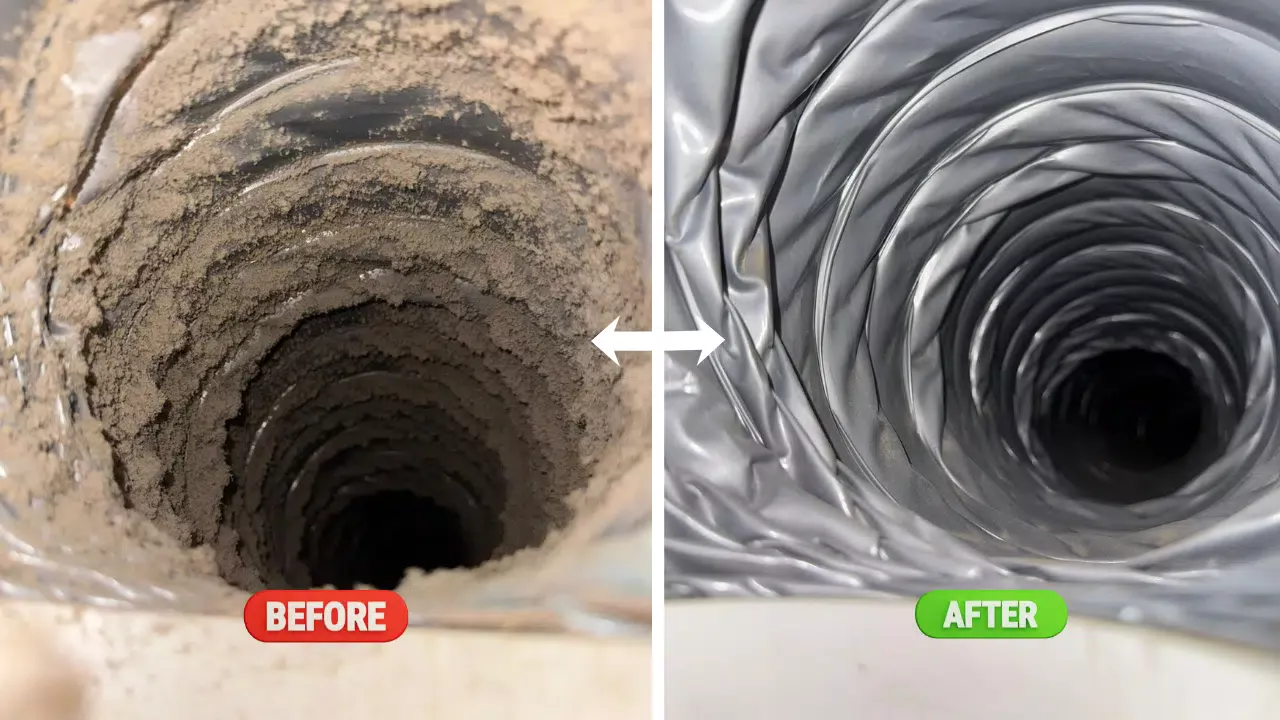

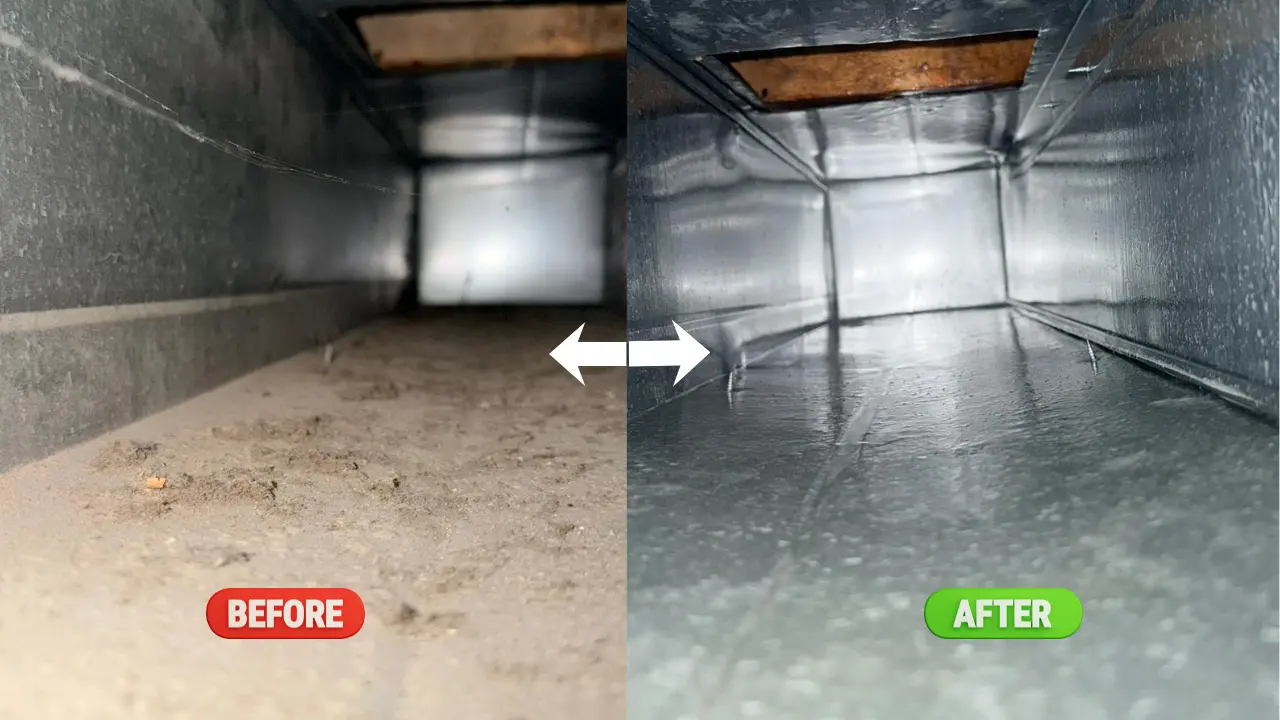

Cleaning your furnace yourself is realistic for about half the job. With the power off, you can safely replace the filter, wash the vent covers, vacuum the return grille, and vacuum loose dust out of the blower compartment. What you can’t reach is the long trunk lines and the inside walls of the ducts. Those need negative-pressure equipment most homeowners don’t own. And burners, the gas valve and anything else on the gas side belong to a licensed gas technician. Full stop.
Here’s how to handle cleaning your furnace yourself properly, and how to tell when you’ve hit the limit of what a household vacuum can do.
Is cleaning your furnace yourself actually safe?
Yes, if you stick to the air side of the system and cut the power first. Cleaning your furnace yourself goes wrong when people skip that step or start poking at parts that burn gas.
Before cleaning your furnace yourself, shut it all down:
- Set the thermostat to off.
- Flip the furnace service switch. It usually looks like a light switch on or near the furnace.
- Turn off the furnace breaker at the panel too. Belt and suspenders.
- Give it 15 minutes to cool if it’s been running.
Many furnaces have a door switch that cuts power when the blower panel comes off. Don’t count on it. We’ve opened plenty of basement furnaces where that switch was taped down years ago.
One more thing. Leave the burners, the flame sensor, the igniter and the gas valve alone. If you ever smell gas, get out and call your gas utility. And make sure you have working carbon monoxide alarms. Health Canada explains how to keep carbon monoxide out of your home, and it’s worth five minutes of your time.
What can you clean yourself, step by step?
You’ll need a household vacuum with a brush attachment, a screwdriver, a bucket of warm soapy water, a few old towels, and a new filter in the right size. That’s the whole kit for cleaning your furnace yourself.
1. Replace the furnace filter
Of everything involved in cleaning your furnace yourself, this matters most. Slide the old filter out, note the size printed on the frame, and put the new one in with the airflow arrow pointing toward the furnace. Check it monthly during heating season and follow the change interval on the filter’s label or in your furnace manual.
2. Wash the vent covers
Floor registers usually lift straight out. Wall and ceiling ones have two screws. Soak them in warm soapy water, scrub with an old brush, and let them dry completely. While the cover’s off, vacuum the first bit of duct you can reach. You’ll find crumbs, pet hair, and in family homes, a surprising number of Lego pieces.
3. Clean the return air grille
The big grille that pulls air back to the furnace collects the most dust. Vacuum the face, unscrew it, wipe it down, and vacuum as far into the opening as your hose goes.
4. Vacuum the blower compartment
With the power off, remove the lower access panel. Gently vacuum loose dust from the compartment floor and around the blower housing. Don’t bend anything, don’t unplug wires, and don’t pull the blower out. If the fan blades are caked with grey felt, that’s a sign the blower wheel needs a proper cleaning, which is a bench job. That’s where cleaning your furnace yourself should stop.
Got an air exchanger (HRV)? Its filters usually rinse out too. Check the manual.
What can’t a shop vac reach when you clean it yourself?
This is where cleaning your furnace yourself runs out of road. A typical house has metres of main trunk line running across the basement ceiling, with branch ducts feeding every room. Your vacuum hose reaches maybe an arm’s length past a vent opening. Everything beyond that stays put.
Two things make the professional version different. First, negative pressure. A powerful vacuum is connected to the duct system and the vents are sealed, so the whole system pulls air inward. Anything knocked loose travels toward the collector instead of drifting into your bedrooms. Second, agitation. Rotary brushes and air whips travel down the ducts and scrub the walls. A shop vac at the grille can’t do either, and poking a brush in without suction can knock dust loose that the furnace then blows through the house.
Here’s where cleaning your furnace yourself works, and where it doesn’t:
| Part of the system | DIY with a household vacuum? | Why |
|---|---|---|
| Furnace filter | Yes | Slides out, no tools |
| Vent covers and registers | Yes | Lift out or two screws |
| Return grille and opening | Yes | Reachable with a hose |
| Blower compartment (loose dust) | Yes, power off | Open panel, gentle vacuum |
| Blower wheel (caked dust) | No | Needs removal and bench cleaning |
| Main trunk lines | No | Too long, needs negative pressure |
| Branch duct walls | No | Needs rotary brushes plus suction |
| Burners, gas valve, igniter | No | Licensed gas technician only |
How long does cleaning your furnace yourself take?
Cleaning your furnace yourself is a Saturday morning job. Swapping the filter takes five minutes. Washing and drying a house full of vent covers takes longer than you’d think, mostly because of the drying. Add the return grille and the blower compartment and you’re looking at a couple of hours, start to finish.
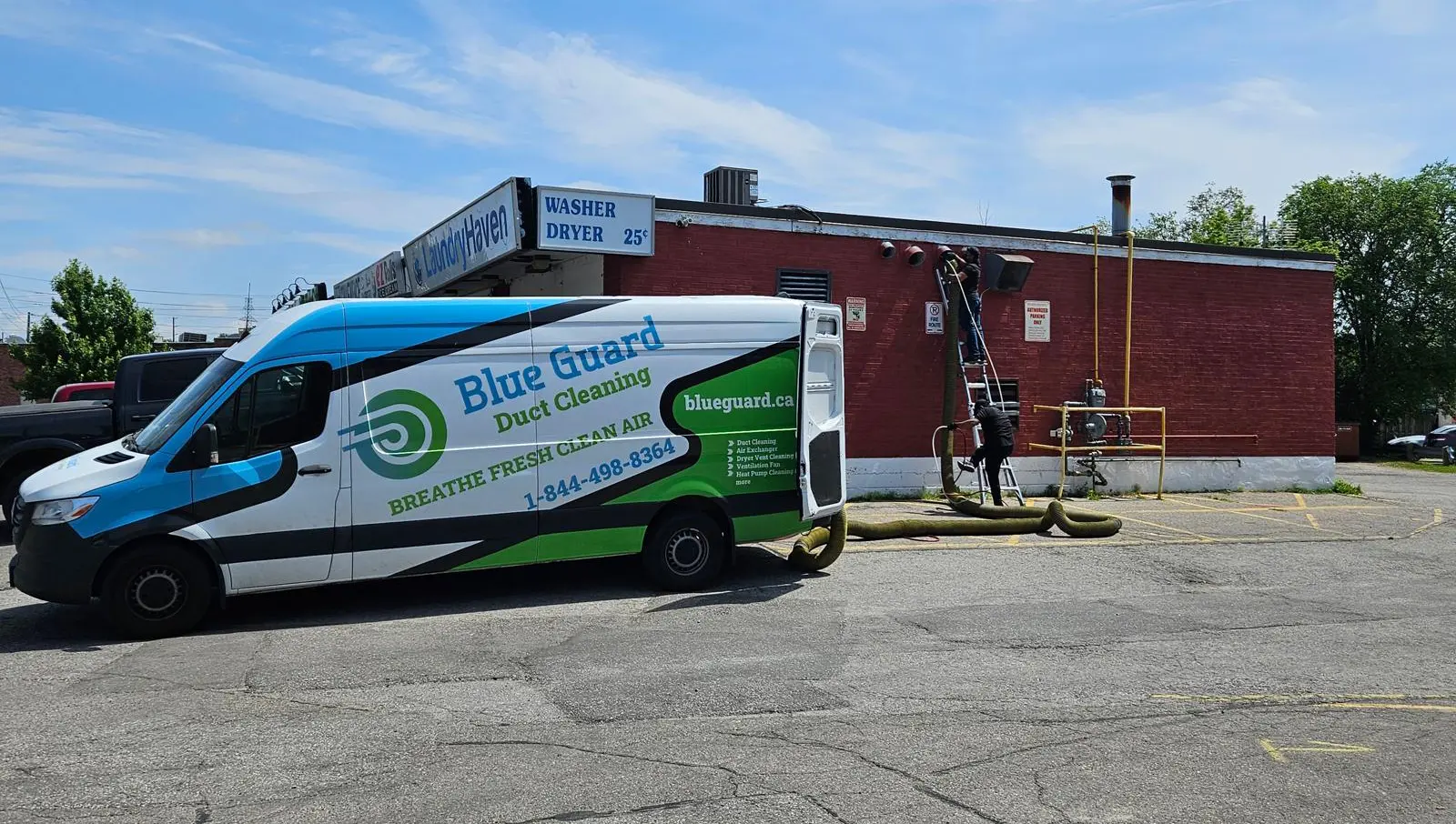
A full duct cleaning is a different animal. On a typical single-furnace home, our crew spends a few hours on it with equipment that fills a truck. Could you rent something similar? Maybe. But you’d still need the brushes, the know-how to seal the system, and a way to check your work. We run a camera inside the ducts before and after every job for exactly that reason. Without it, you’re guessing.
So be honest with yourself about the goal. If it’s routine upkeep, cleaning your furnace yourself covers it nicely. If it’s years of buildup in the ducts, a vacuum won’t get you there.
When do you NOT need a professional at all?
More often than you might expect from a duct cleaning company. If your ducts were professionally cleaned in the last few years, nobody’s renovated since, and you change the filter on schedule, cleaning your furnace yourself is plenty. The U.S. EPA’s guide on air duct cleaning takes the same line: clean ducts when there’s a clear reason, not on a fixed calendar.
A few problems a cleaning won’t solve either way:
- A furnace that won’t heat or keeps cycling. That’s a job for a licensed furnace technician.
- Mould caused by a leak or high humidity. Fix the moisture first, or it grows back.
- Dust from an old filter. Sometimes the new filter really is the whole fix.
We’d rather tell you that now than sell you something you don’t need.
When is it worth calling a professional?
Some signs mean the dirt is past where cleaning your furnace yourself can reach:
- ✅ Dust puffs out of the vents when the furnace kicks on
- ✅ You’ve renovated or finished a basement and drywall dust got into the system
- ✅ You bought the house and have no idea when the ducts were last done
- ✅ The blower wheel is caked with grey felt
- ✅ You see signs of mice or visible mould inside the ducts
- ✅ A new filter clogs up much faster than it should
If you tick one or two, a proper cleaning to the NADCA standard makes sense. NADCA, the National Air Duct Cleaners Association, has plain-language guidance for homeowners on what a good job looks like. You can also read how we work on our about us page, or see how we stack up in our look at the top air duct cleaning companies in Ottawa.
We’re an independent, NADCA-certified team working in English and French. Air duct cleaning starts from $189 in the Ottawa area and from $149 for up to 10 vents in Durham, and we confirm your price before any work begins. Details are on our Ottawa air duct cleaning page. For more DIY tips, our DIY duct cleaning guide goes deeper on the ductwork side.
Done the DIY part and still seeing dust? Get your exact price upfront and we’ll tell you honestly if you need us.
Phone: 1-844-498-8364 · Email: sales@blueguard.ca · Web: blueguard.ca
Free quote. Fast scheduling. NADCA-certified duct and furnace blower cleaning across Ottawa and Durham.
Frequently asked questions
Can I clean my furnace myself?
Yes, for the air side of the system. Cleaning your furnace yourself safely covers the filter, vent covers, return grille and loose dust in the blower compartment, all with the power off. Leave the burners, gas valve and igniter to a licensed gas technician, and leave the trunk lines to equipment built for them.
Can I clean my air ducts with a regular vacuum?
Only the first arm’s length past each vent. A household vacuum can’t reach the main trunk lines or scrub the duct walls. Professional cleaning uses negative pressure and rotary brushes, so dust is pulled out instead of being knocked loose and blown back into your rooms when the furnace runs.
How often should I change my furnace filter?
Check it every month during heating season and follow the change interval printed on the filter or in your furnace manual. Homes with pets, recent renovations or lots of foot traffic usually need changes sooner. If a new filter turns grey unusually fast, dust may be coming from inside the ducts.
Should I clean the furnace blower myself?
You can vacuum loose dust from the blower compartment with the power off. If the fan blades are packed with grey buildup, the wheel usually needs to come out for a proper cleaning. That’s a bench job with a real risk of damaging the motor or wiring, so it’s best left to a professional.
Is it safe to take the furnace panel off?
The blower access panel is designed to come off for filter and maintenance access. Turn the thermostat off, flip the furnace service switch and the breaker, and let it cool first. Never open the burner area or touch the gas valve. If you smell gas, leave the house and call your gas utility.
How do I know if I need professional duct cleaning?
Common signs include dust puffing from vents, a recent renovation, visible mould or pest signs in the ducts, or a new filter that clogs quickly. If none of those apply and your ducts were cleaned recently, cleaning your furnace yourself is usually enough. When in doubt, ask for an honest assessment first.